
Efforts to strengthen sustainable ecosystem management in Bhutan are gaining momentum through innovative financing mechanisms that link conservation with community wellbeing. In this spirit, the Tarayana Foundation and the Department of Forests and Park Services (DoFPS) under Samtse division convened a coordination and planning meeting in Samtse to explore the establishment of two Payment for Ecosystem Services (PES) initiatives, one in Tamang Dara Community Forest and another at Bukay Dham.
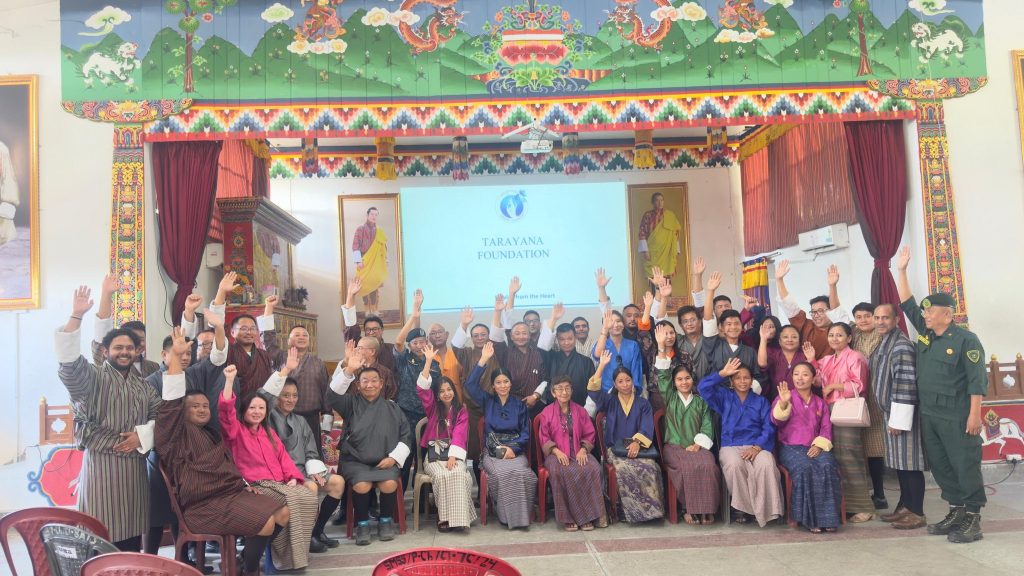
The meeting brought together representatives from Tarayana Foundation led by the Technical Director and the Samtse Forest Division under DoFPS to jointly examine how PES can support ecosystem protection while generating sustainable financing for local communities. The proposed initiatives aim to develop a model that not only benefits local stakeholders but can also be replicated across other regions of Bhutan.
Rethinking PES, Beyond Water-Based Models
Currently PES schemes in Bhutan have focused primarily on water-related ecosystem services. However, the discussions in Samtse explored a broader and more innovative approach, linking PES with ecotourism and sustainable financing mechanisms.
Under this concept, conservation efforts would be supported through financial contributions from those who benefit from ecosystem services, including visitors and downstream communities. The aim is to establish a sustainable financial model that rewards communities for protecting forests, watersheds, and biodiversity while strengthening local ownership and long-term stewardship.
The initiative envisions Samtse as a pilot district, demonstrating how PES can be integrated with tourism and community-driven financing. If successful, the model could serve as a replicable framework for other parts of Bhutan.
Building Partnerships for Implementation
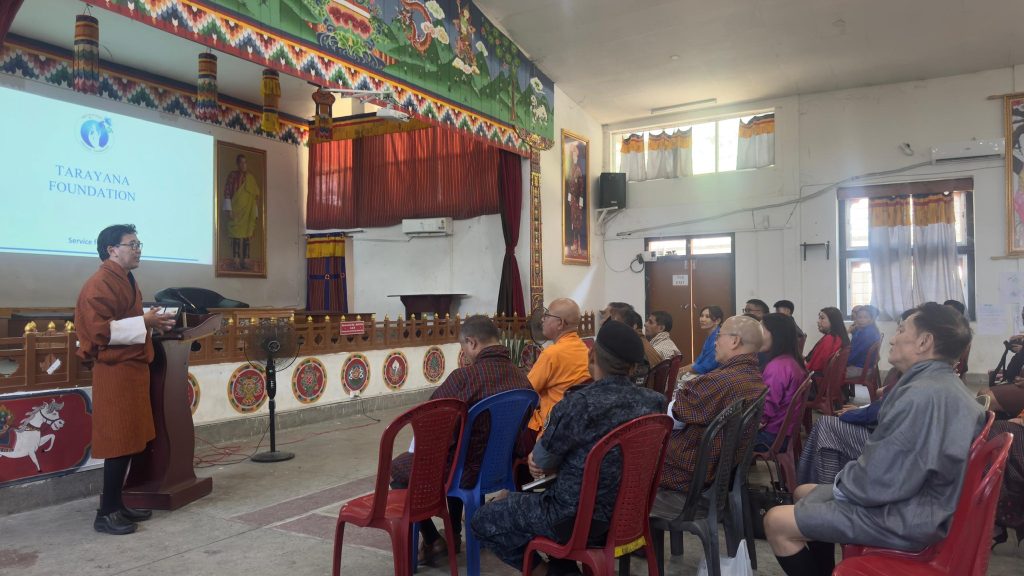
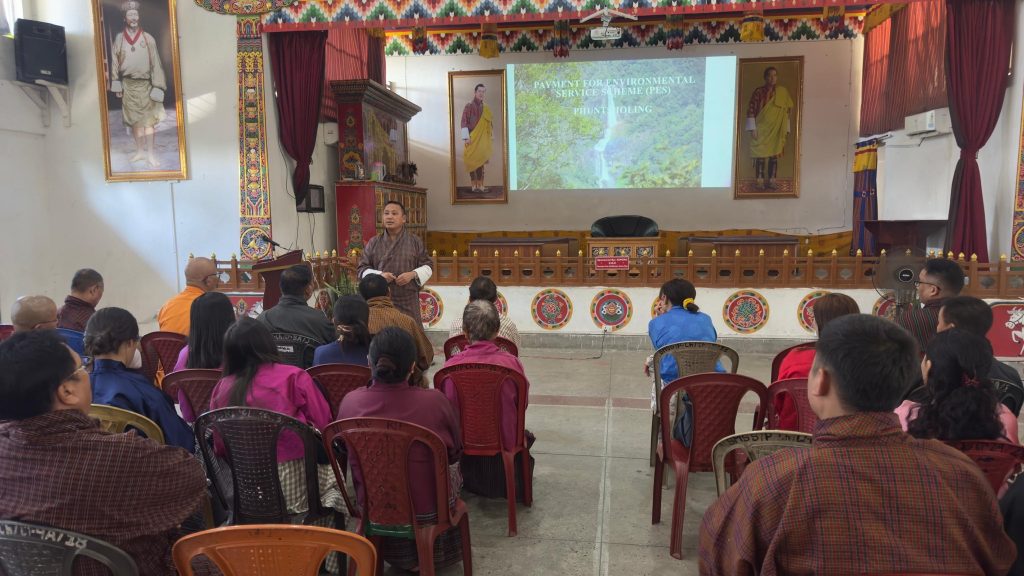
The planning meeting focused on establishing a strong institutional foundation for the initiative. A core team was formed comprising members from Tarayana Foundation’s project team and the Samtse Forest Division. Key discussions centered on identifying focal persons, clarifying roles and responsibilities, and preparing a preliminary work plan for implementation.
While Tarayana Foundation will contribute its expertise in community mobilisation and grassroots engagement, the Samtse Forest Division will provide technical leadership and institutional support. The initiative will also prioritise thorough documentation of all processes from inception to implementation, ensuring transparency and enabling learning for future scaling.
Community Insights from Tamang Dara
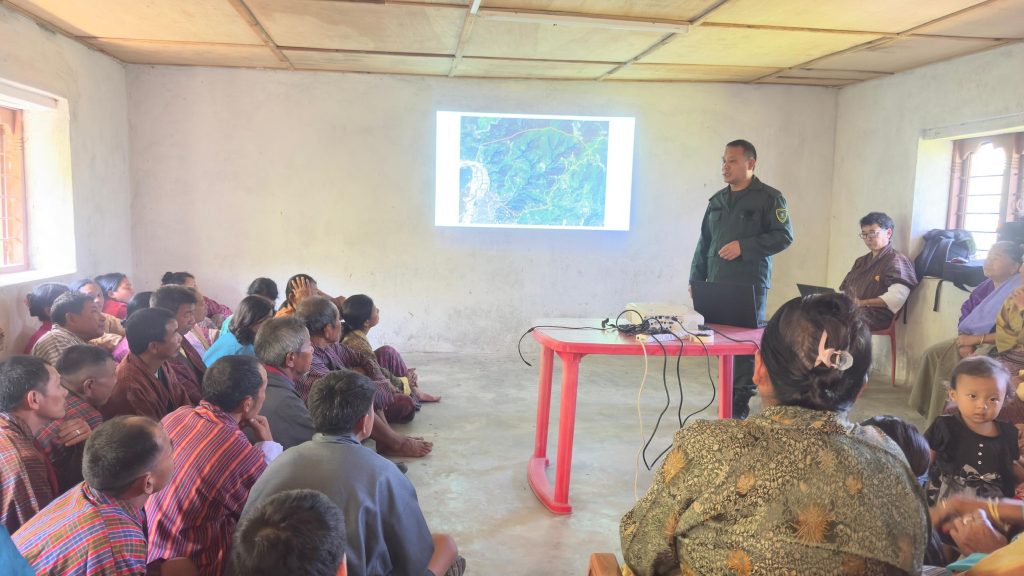
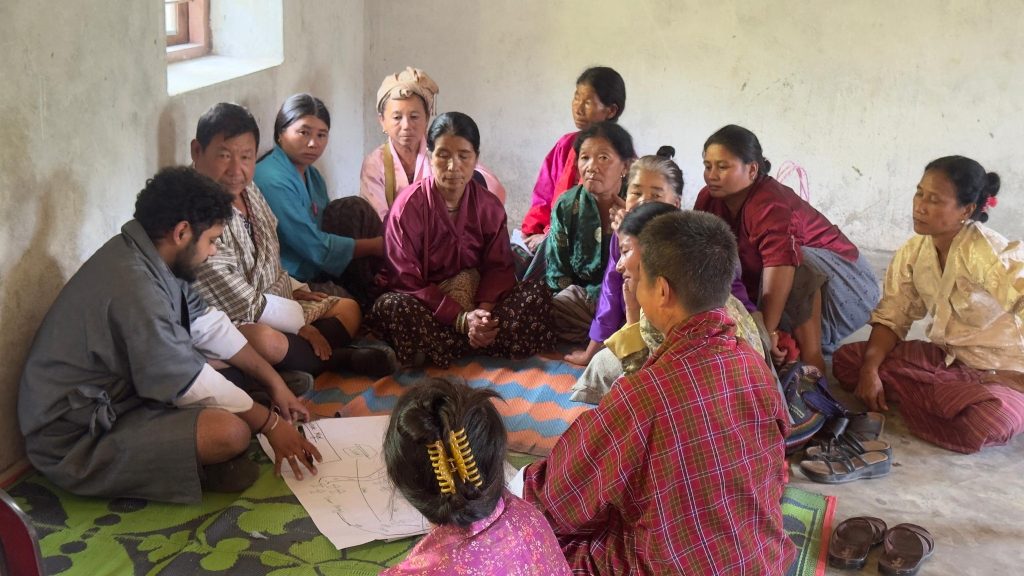
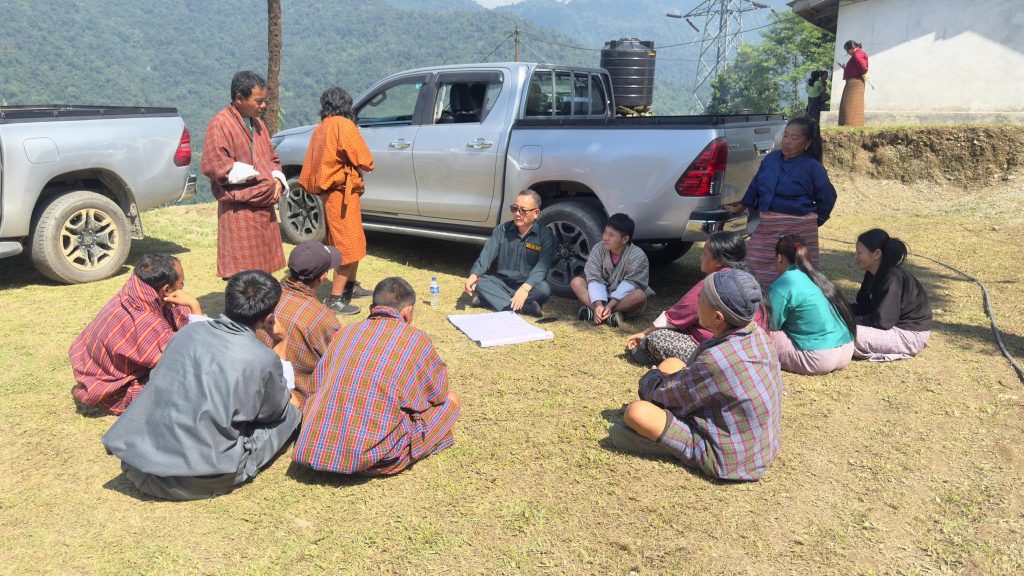
As part of the consultations, the team visited Tamang Dara Community Forest, where community members were introduced to the PES concept and invited to share their perspectives.
Established in 2015, the community forest is managed by 22 Community Forest Management Group members and spans more than 100 hectares of forest. The forest plays a vital role in supplying water to surrounding areas, including Gurung Basti and nearby settlements.
Community members expressed strong interest in participating in the PES initiative. However, discussions also revealed a number of challenges affecting both water resources and forest ecosystems. Residents reported decreasing water volumes and seasonal drying of water sources during winter, an issue that had not been observed historically. Factors contributing to these challenges include population growth, diversion of water sources, fragile geological conditions, landslides, and impacts from road construction and transmission line clearing.
Concerns regarding water quality have also emerged in recent years. Waste dumping near viewpoints, unmanaged tap water usage, and potential contamination from septic systems were highlighted as growing risks. In addition, environmental pressures such as illegal logging and cattle grazing in water source areas were identified as ongoing threats.
Despite these challenges, the community has already undertaken several initiatives to protect their forest resources. The Community Forest Management Group conducts regular patrols to prevent illegal logging, undertakes tree plantation activities, and implements waste management measures. However, members noted that limited financial resources often hinder the expansion and sustainability of these efforts.
For many residents, the PES initiative offers a promising solution. By providing financial incentives to communities protecting critical ecosystem services, the mechanism could enable stronger conservation efforts while supporting local livelihoods.
Bukay Dham: Linking Conservation and Tourism
The second consultation focused on Bukay Dham, a sacred site with significant religious, cultural, and ecological importance. Managed under the Bukay Dham Community Forest, the site currently has about 20 active community members responsible for its stewardship.
Bukay Dham is known for its sacred caves associated with oral traditions related to Lord Shiva and Sati Devi. The site is believed to include a wish-fulfilling cave and a meditation cave linked to ancient spiritual practices. Despite its cultural significance, awareness among Bhutanese visitors remains limited, while pilgrims from neighbouring countries are often more familiar with its sacred narratives.
The community currently collects an entry fee of Nu. 50 per visitor, although challenges remain in consistent fee enforcement and visitor management. Infrastructure gaps were also identified, including the need for improved temple facilities, parking areas, safety measures along footpaths, and proper visitor amenities.
The PES model proposed for Bukay Dham aims to link tourism revenue with ecosystem conservation. A portion of funds generated through tourism-related services could be allocated toward maintaining the forest, improving infrastructure, and supporting long-term environmental protection.
The site’s accessibility and growing tourism potential present significant opportunities for youth and women engagement in tourism-related enterprises, ranging from guiding services to small businesses and hospitality activities.
Strengthening Community Ownership
Across both consultation sites, a common theme emerged: communities are willing to protect their ecosystems but lack sustainable financial mechanisms to support long-term conservation efforts.
While many community members already demonstrate strong environmental stewardship, financial limitations often prevent them from scaling up their initiatives. PES provides a potential pathway to address this gap by creating structured incentives that reward communities for safeguarding ecosystem services.
Importantly, the initiative emphasises community ownership. Local residents will remain the primary custodians of the forests and ecosystems, while Tarayana Foundation and DoFPS will act as facilitators and technical supporters.
Laying the Groundwork for Implementation
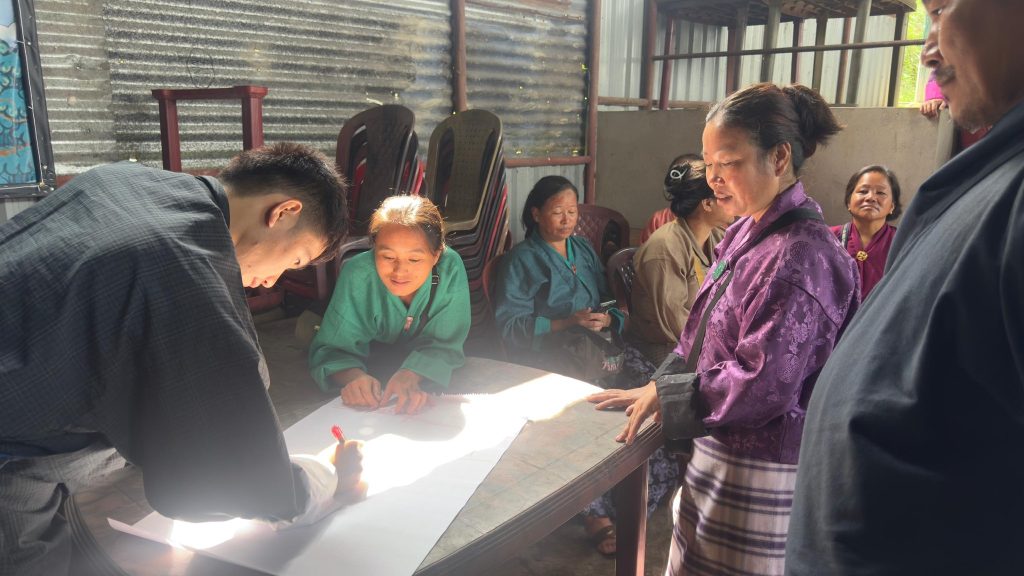
Following the consultations, the team held an internal wrap-up meeting to outline the next phase of the initiative. Immediate priorities include consolidating documentation and verifying beneficiary data from downstream users of ecosystem services.
While both sites remain important, the team agreed to prioritise the Bukay Dham PES pilot in the initial phase, given its strong potential for integrating conservation with tourism revenue.
Baseline studies will be conducted to better understand visitor patterns, infrastructure conditions, and community needs. Planned activities include visitor satisfaction surveys, environmental assessments, and data collection on existing economic activities linked to tourism.
The initiative will also focus on strengthening community capacity through training programmes, including entrepreneurship development, safeguard awareness, and sustainable tourism practices. Youth and women will be encouraged to actively participate, and local student groups may be engaged as citizen scientists to monitor environmental conditions and support awareness campaigns.
Towards a Replicable Model for Bhutan
The Samtse consultations mark an important step toward developing a new generation of PES models in Bhutan, ones that integrate ecosystem protection, tourism opportunities, and community-driven financing mechanisms.
With strong collaboration between Tarayana Foundation, the Department of Forests and Park Services particularly the Samtse Forest Division, and local communities, the initiative holds promising potential to become a replicable model for sustainable ecosystem financing across the country.
By aligning conservation goals with community livelihoods and tourism development, the PES initiatives in Samtse aim to demonstrate that protecting nature and improving rural wellbeing can go hand in hand, ensuring that Bhutan’s natural heritage continues to benefit both people and the environment for generations to come.