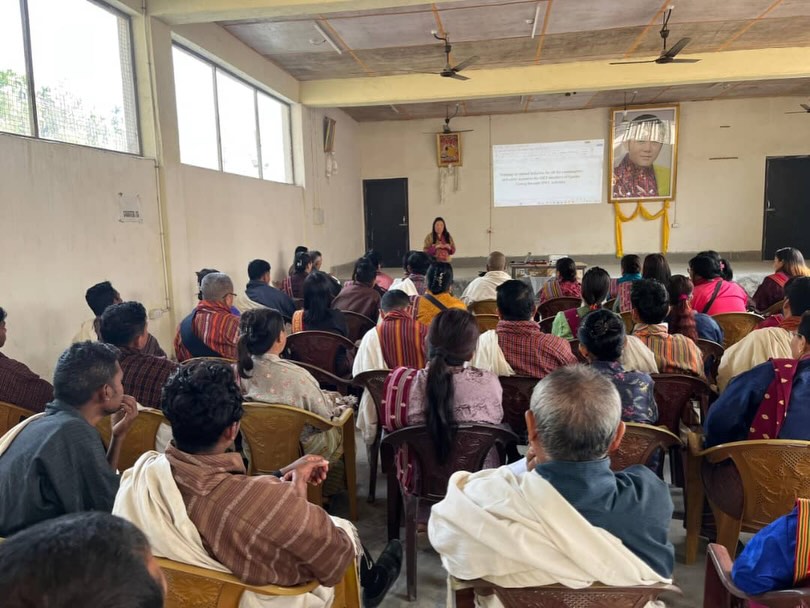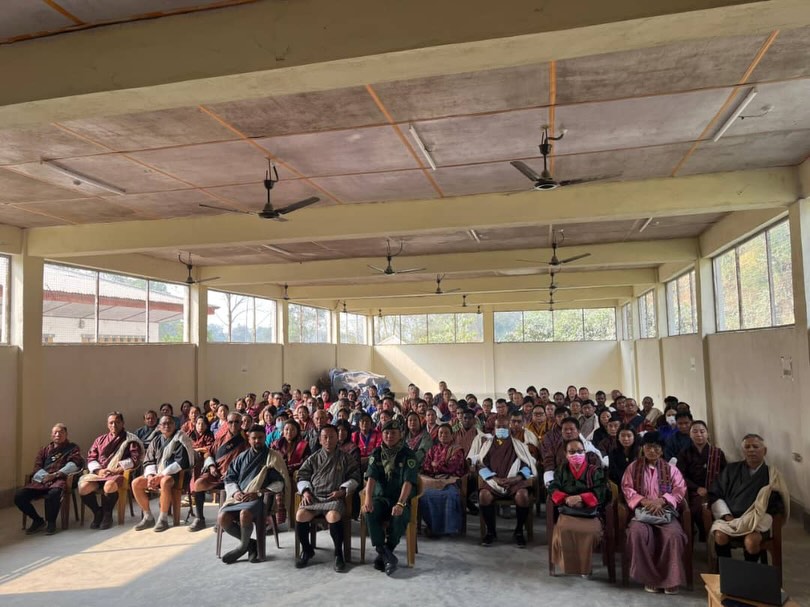
As efforts continue to advance sustainable ecosystem management in southwestern Bhutan, communities in Samtse are also taking important steps toward strengthening human–wildlife coexistence. Alongside the exploration of innovative conservation financing through Payment for Ecosystem Services (PES), local stakeholders are working to equip communities with the knowledge and skills needed to safely interact with wildlife while protecting their livelihoods.
With the support of the Divisional Forest Office Samtse, a hands-on training programme on animal behaviour and safety measures is currently being conducted for members of the Quick Response Team (QRT) and community residents from Dhamtshangma–Khanduthang Chiwog and Lamaithang–Taserpo Chiwog under Samtse Gewog.
The training, which began on 9th February and will conclude on 13th February 2026, aims to strengthen community preparedness and build practical skills that support safer interactions between people and wildlife. Through interactive sessions and field-based learning, participants are gaining valuable insights into wildlife behaviour, conflict prevention strategies, and appropriate response measures when encountering wild animals.
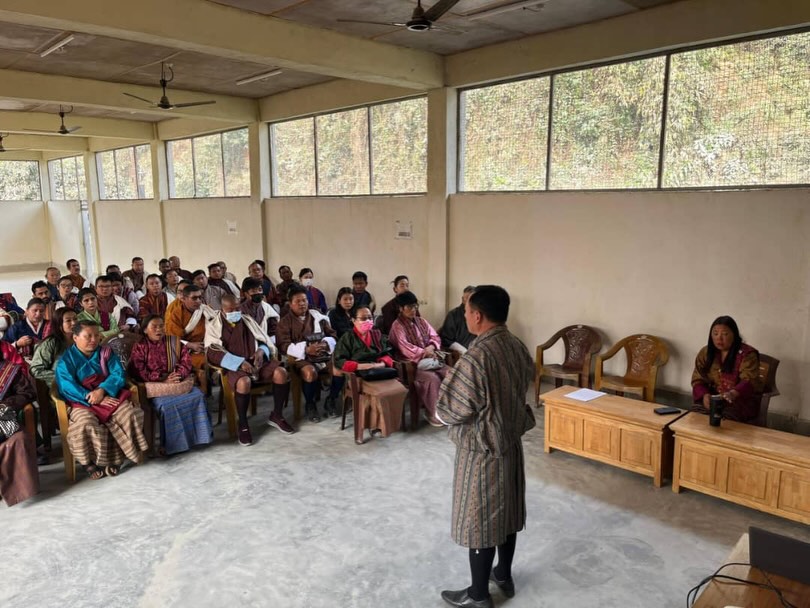
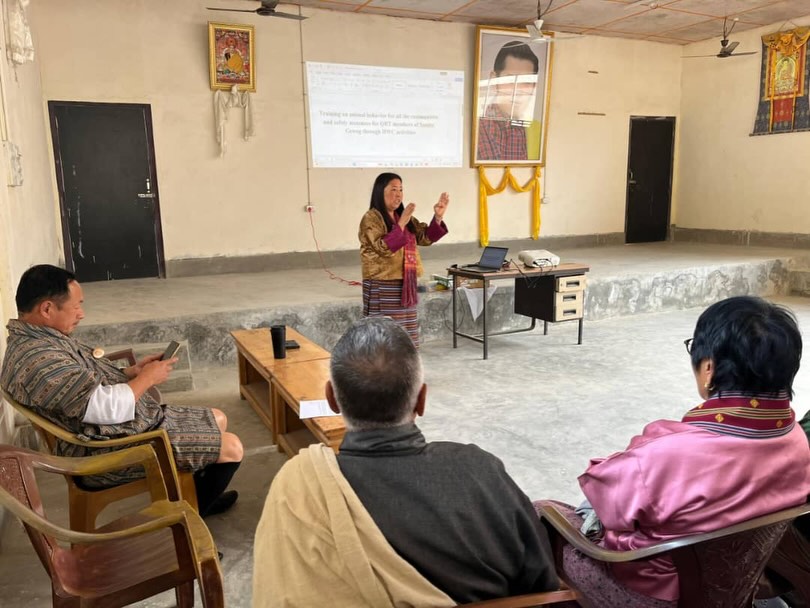
Empowering Communities at the Frontline
Communities living near forests and wildlife habitats often face challenges related to crop damage, livestock losses, and safety concerns. In many cases, local residents are the first to respond when wildlife enters villages or agricultural fields.
The training programme therefore focuses on empowering community members and Quick Response Team volunteers with practical knowledge that can help reduce risks while ensuring that wildlife is treated responsibly and humanely.
Participants are learning to better understand animal behaviour patterns, identify potential warning signs, and adopt safe practices when managing encounters with wildlife. The sessions also emphasize the importance of coordination with forest officials and local authorities to ensure effective and timely responses.
By strengthening local preparedness, the training contributes to building communities that are more confident and capable in addressing human–wildlife interactions.