
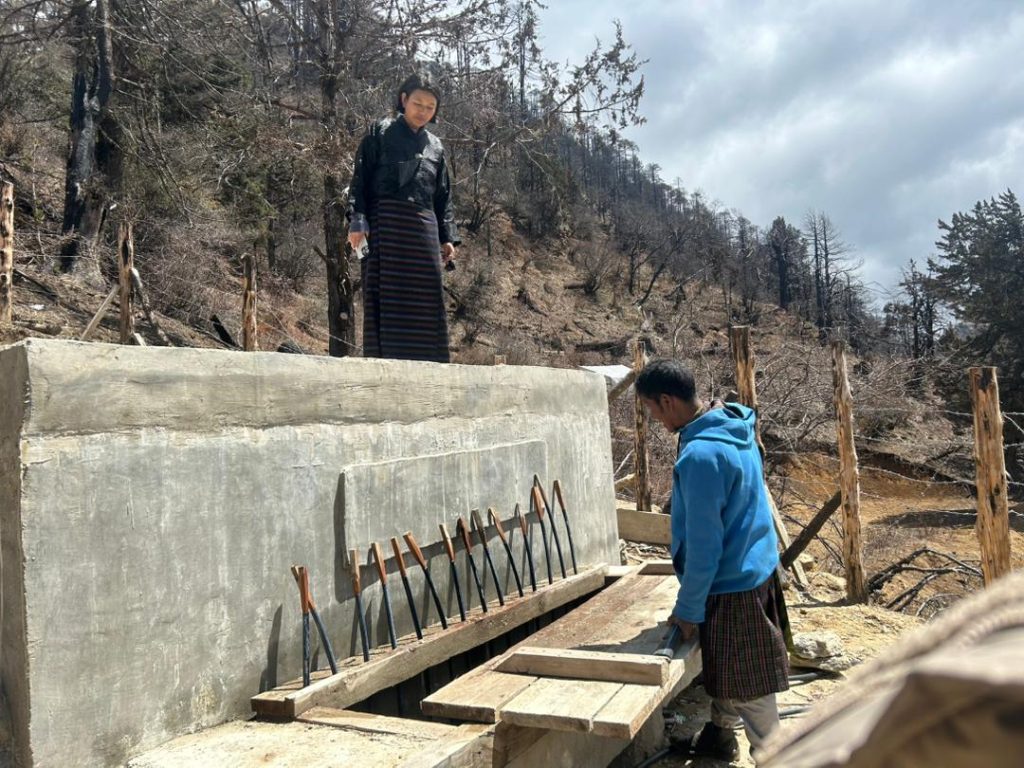
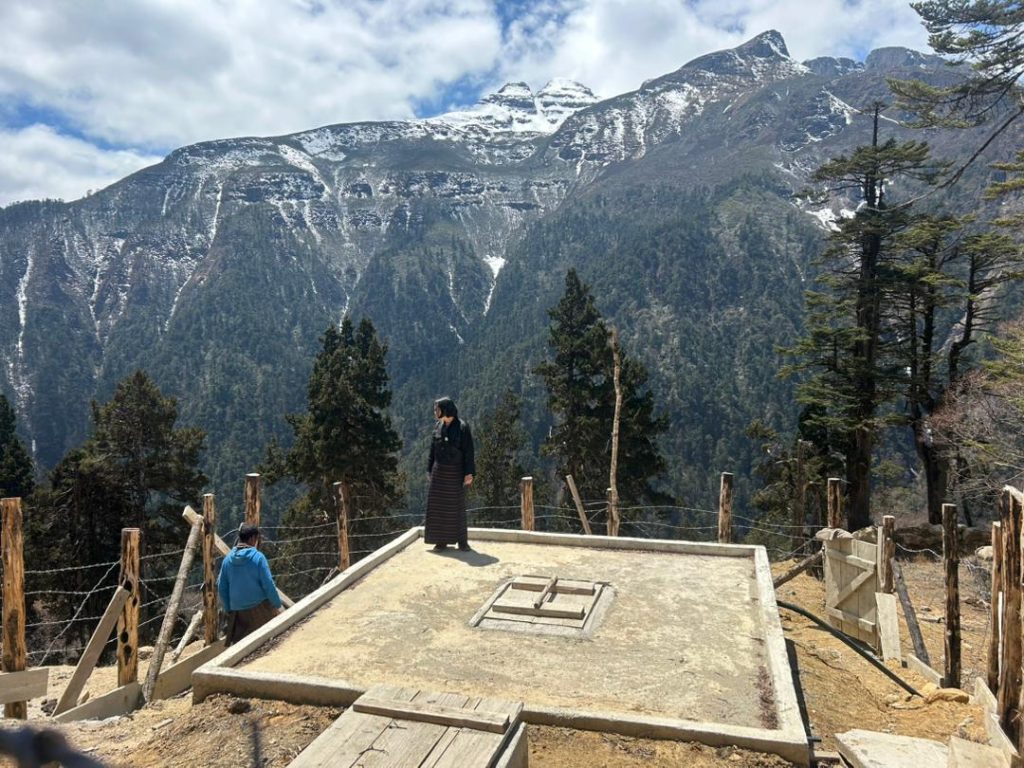
As part of the ongoing project in Naro Gewog, a field monitoring visit was conducted in Barshong Gewog the next day to assess the progress and functionality of water supply and livelihood interventions supporting Barshong and Yuesa villages.
The water supply system in Barshong village draws from both the Thangkana River and a nearby spring source. Support from the Tarayana Foundation included the construction of a water filtration chamber, storage tank, and protective fencing for Barshong village, along with a water storage tank, water chamber, and protective fencing for Yuesa village.
During the visit, it was observed that the community had removed the charcoal from the filtration chamber due to concerns that it was causing pipe blockages. The team discussed the importance of charcoal filtration in improving water quality and advised the use of larger charcoal pieces to reduce clogging while maintaining effective filtration.
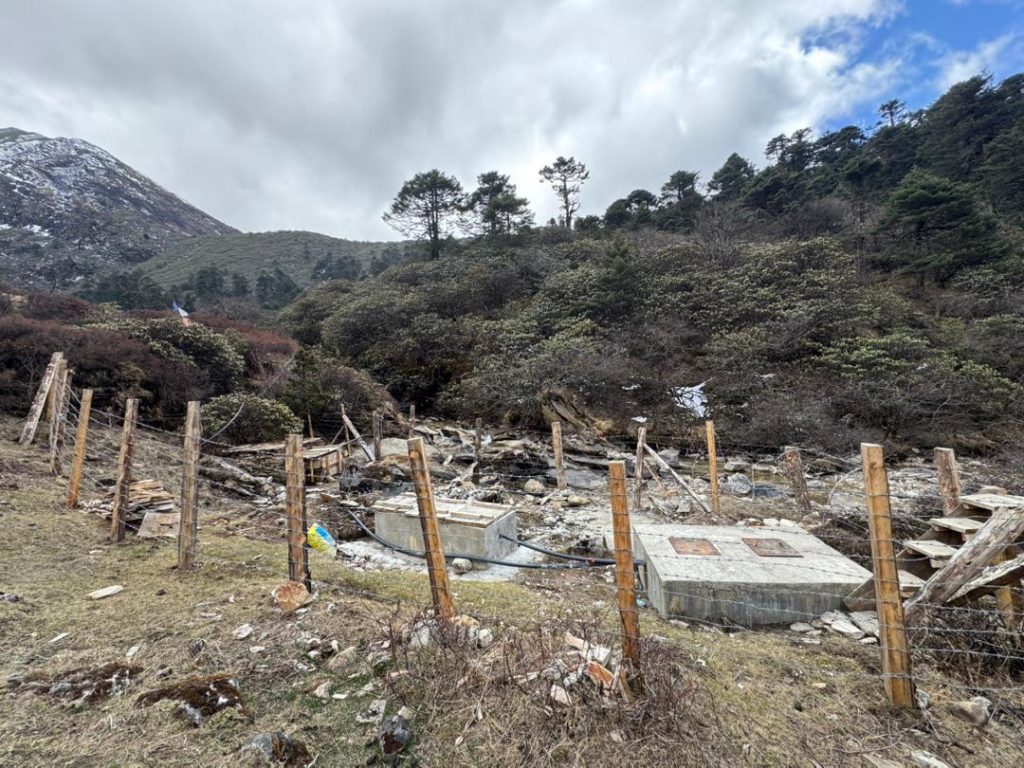
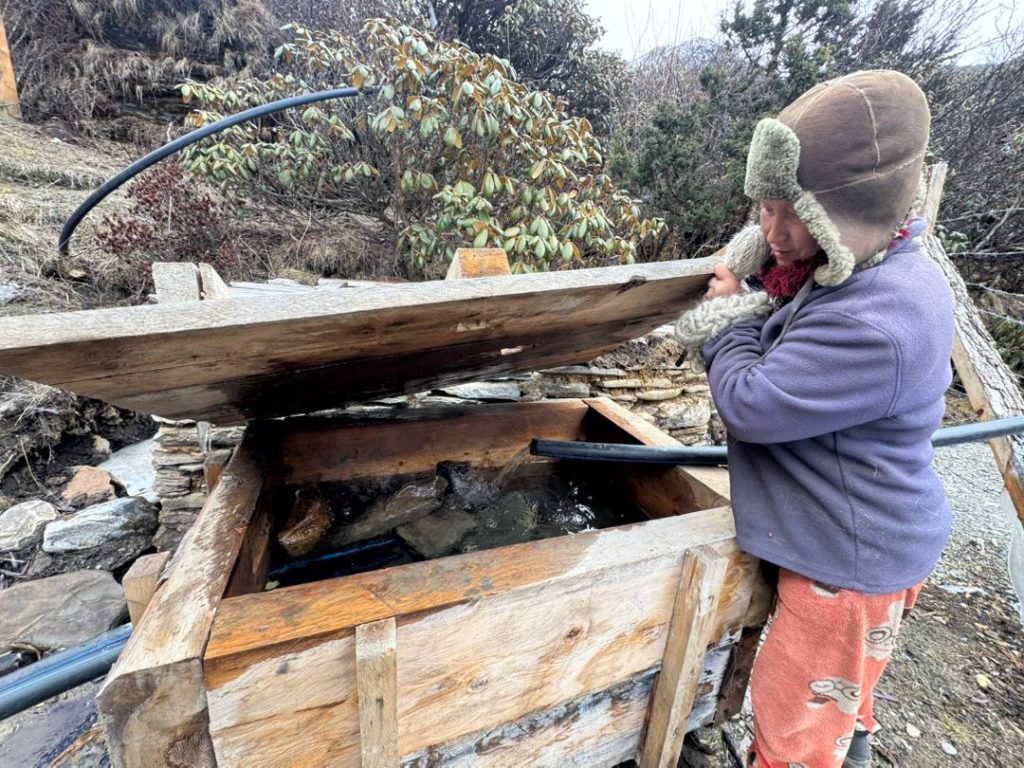
The spring-fed water system continues to demonstrate strong climate resilience and reliability throughout the year. During summer, when river water becomes muddy and pipelines are vulnerable to blockage from debris and increased flow, the spring provides cleaner and more dependable water. In winter, the relatively warmer spring water helps prevent freezing, ensuring a continuous supply when river sources are affected by ice.
However, the water supply line to Yuesa village is currently non-functional. According to the Water User Group chairperson, the supply was temporarily suspended due to overflow issues at the intake tank caused by an additional water source feeding into the system. This overflow has contributed to road erosion and instability in the area. To address the issue, the community requested additional piping to safely divert excess water below the road. It was also observed that the pipelines had been buried deep underground as a preventive measure against freezing during colder months.
The monitoring visit also reviewed livelihood interventions under the project. The saang processing machine provided to the community remains unused despite the completion of a shed to house the equipment. The committee committed to relocating the machine into the shed and requested technical support for installation and operational training.
Overall, the interventions show promising results in strengthening water security and climate resilience in the highland communities. At the same time, the visit highlighted the continued need for technical guidance, stronger system and group management, improved bylaws, and enhanced community capacity to ensure the long-term sustainability of both water and livelihood initiatives.