
Water Security
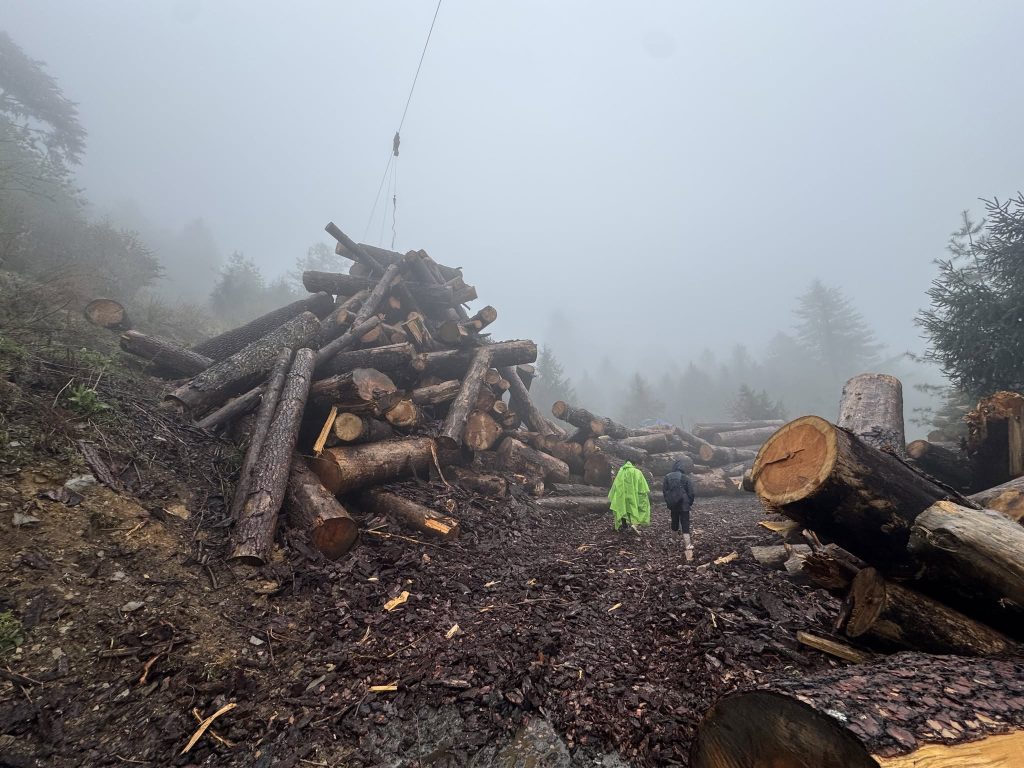
Water begins its journey long before it reaches a tap, an irrigation channel, or a paddy field. It emerges quietly from springs hidden beneath forests, wetlands, and mountain slopes, sustaining lives, livelihoods, and ecosystems. Yet across Bhutan, many of these vital spring sources are under increasing pressure from changing climatic conditions, land-use changes, and growing water demands.
Recognizing the importance of understanding and protecting these lifelines, Tarayana Foundation, under the Integrated Climate Adaptation Solutions for the Hindu Kush Himalaya Region) (HI-CAS) Project welcomed Mr. Yogesh Chandra Barola, Hydrologist from ICIMOD, for a technical support mission from 21 April to 4 May 2026.
Supported by ICIMOD through Global Affairs Canada, the mission brought together technical expertise, community knowledge, and field-based learning to strengthen springshed management efforts in Punakha and Paro.
Building Knowledge for Spring Revival
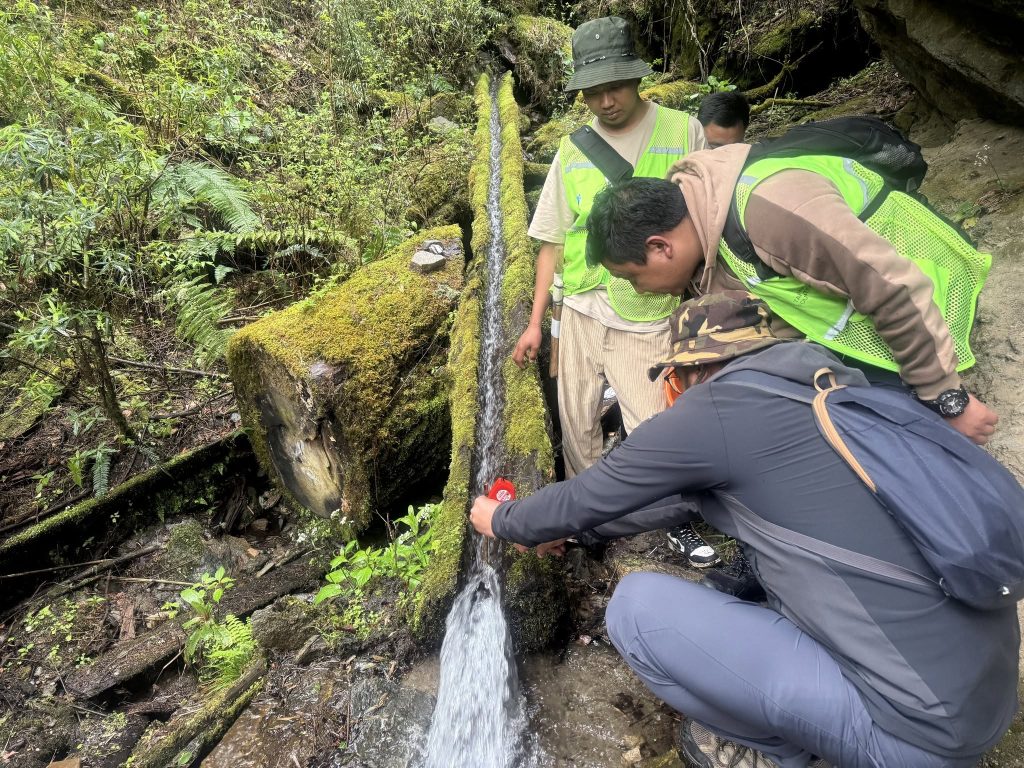
The mission began in Thimphu with an orientation on the Six-Step Protocol for Spring Revival, a systematic approach to understanding spring systems and their recharge areas. The sessions covered spring mapping, GPS data collection, discharge measurements, water quality monitoring, and hydrogeological assessments, while introducing digital tools such as KoboCollect and Geographic Information Systems (GIS).
For the project team, the training provided not only technical skills but also a deeper appreciation of how scientific assessments can be combined with local experiences and indigenous knowledge to develop sustainable solutions.
Walking to the Source
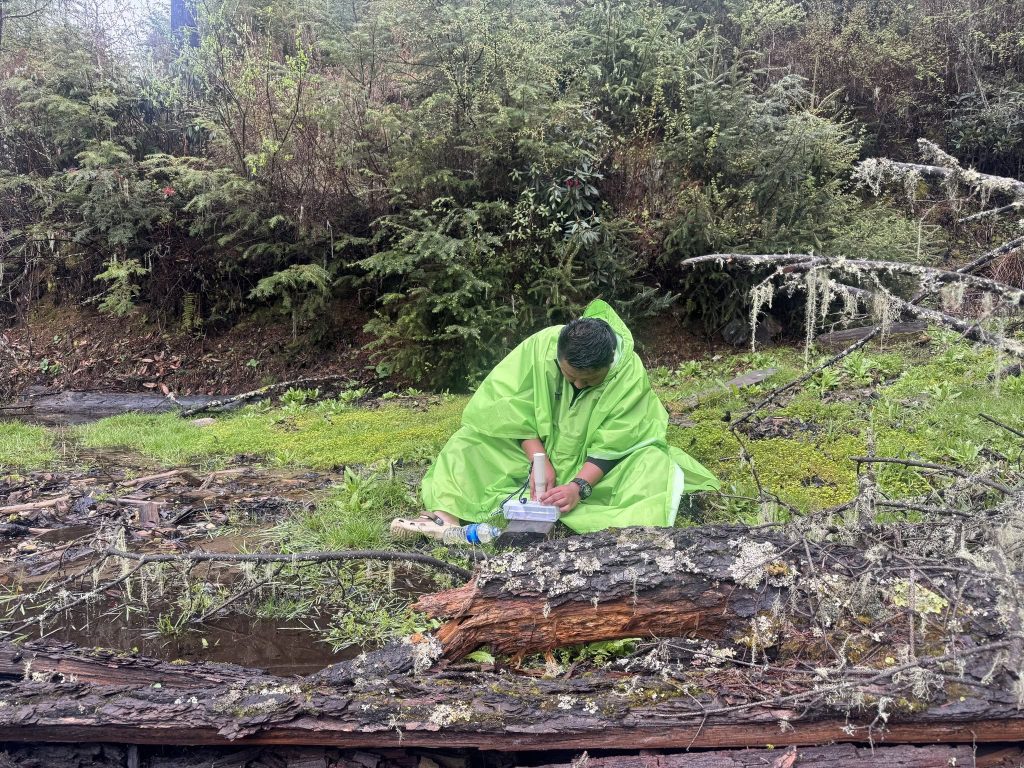
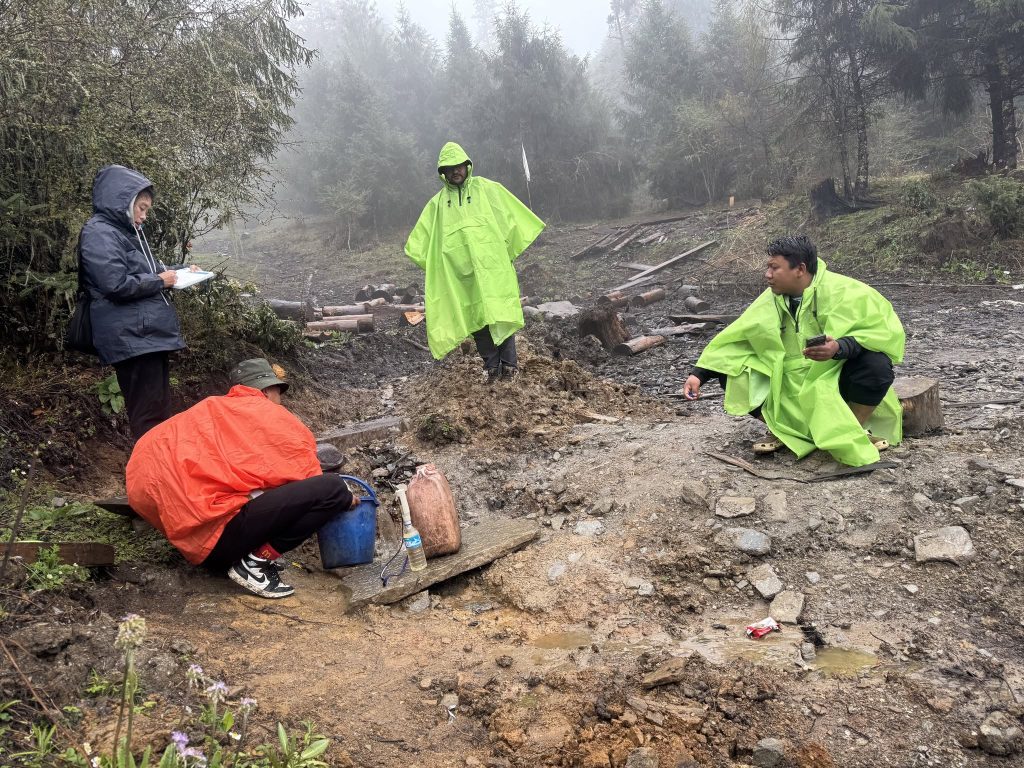
The fieldwork commenced in Yebisa, Punakha, where the team visited Mekulum Chu and other springs to measure discharge, assess water quality, and record geological information. Discussions with community members revealed growing concerns about declining water availability, particularly during the paddy cultivation season when water demand is at its highest.
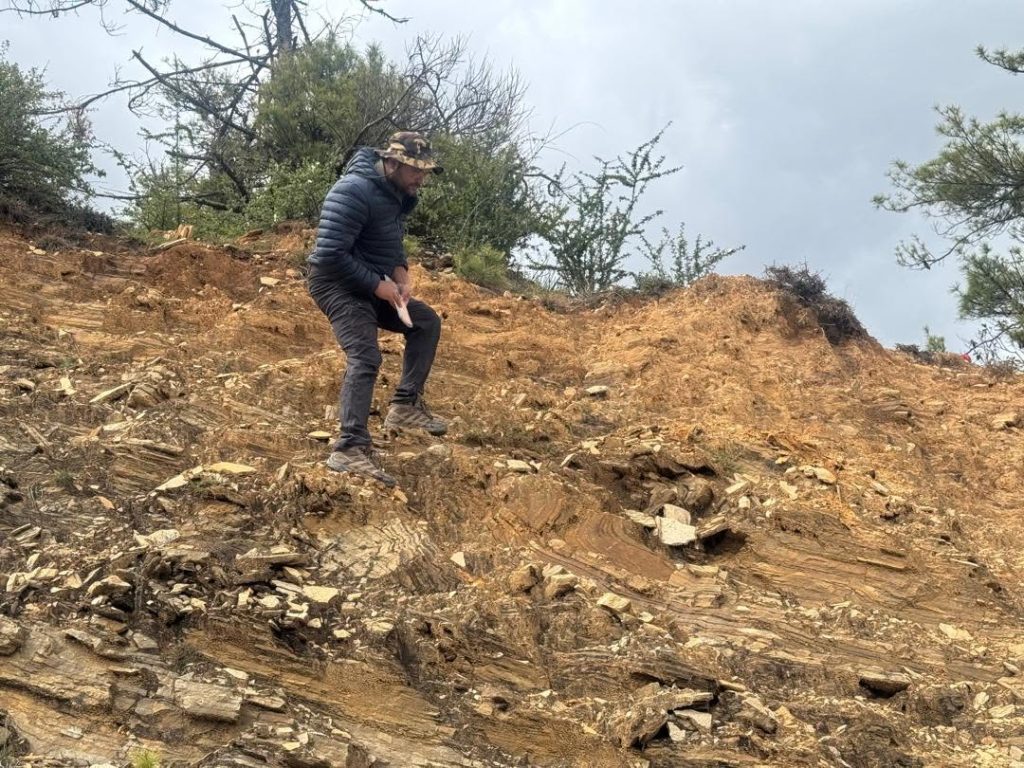
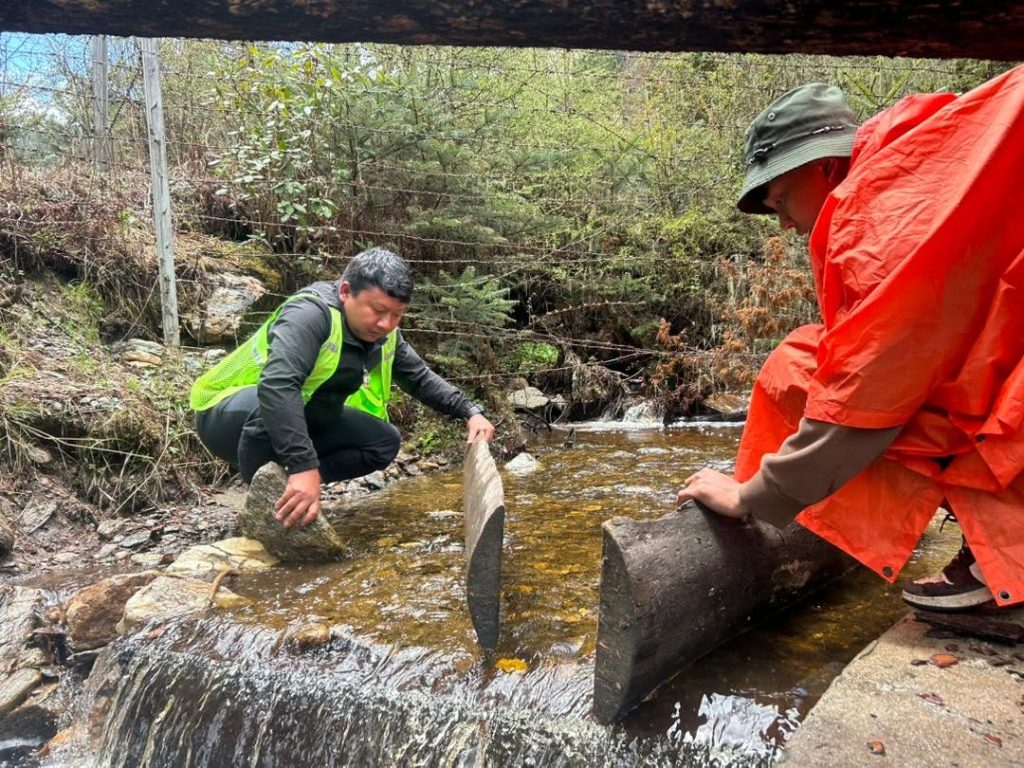
One of the most significant field visits was to the Dorona spring source, located nearly two hours from the nearest road point. The challenging trek offered valuable insights into the spring’s recharge system. The source was found in a wetland ecosystem, reinforcing the critical role wetlands play in capturing rainfall, replenishing groundwater, and sustaining spring flows year-round.
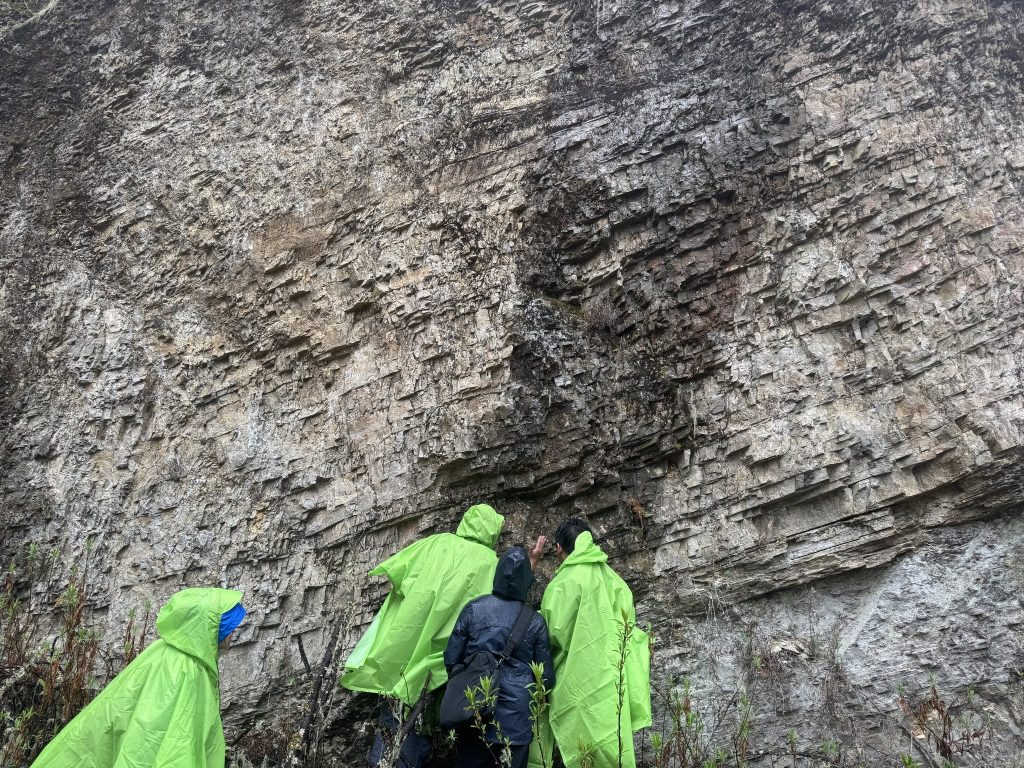
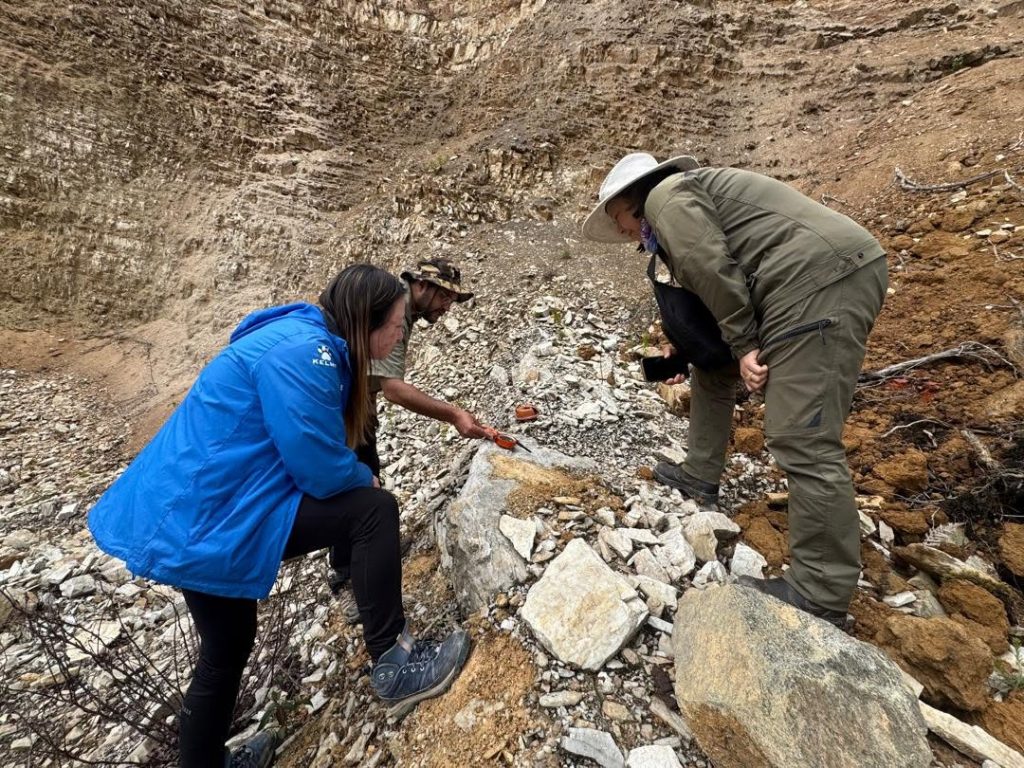
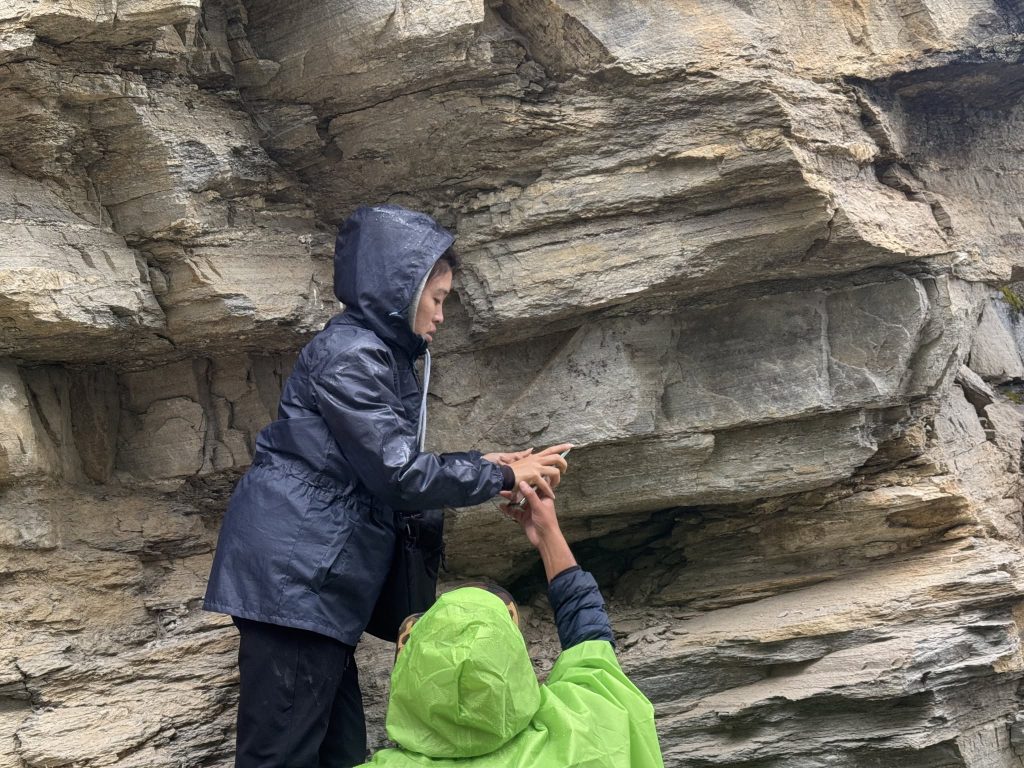
Further assessments at Sewala, Zimsulum, and Nagselum spring sources enabled the team to study rock formations, geological structures, and landscape features that influence groundwater movement. Understanding these natural pathways is essential for identifying recharge zones and designing effective spring protection measures.
Listening to Communities
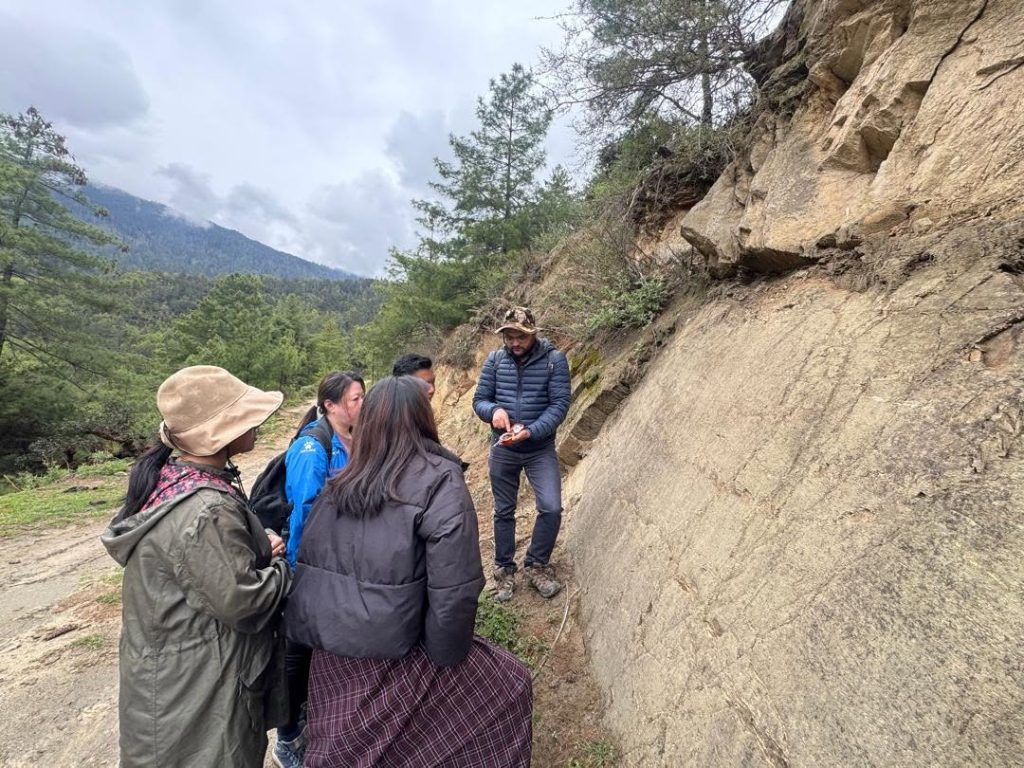
While technical assessments formed an important part of the mission, equal emphasis was placed on listening to the communities that depend on these water sources every day.
In Yebisa and later in other chiwogs, Chubu Gewog, the team conducted springshed awareness sessions and engaged residents in discussions on agriculture, water access, climate-related changes, and local adaptation practices. Community members shared firsthand accounts of drying springs, changing rainfall patterns, and the challenges of maintaining agricultural productivity amid increasing water scarcity.
These conversations provided valuable context to the scientific findings, highlighting the importance of placing local experiences at the center of water resource planning.
Expanding the Assessment to Paro
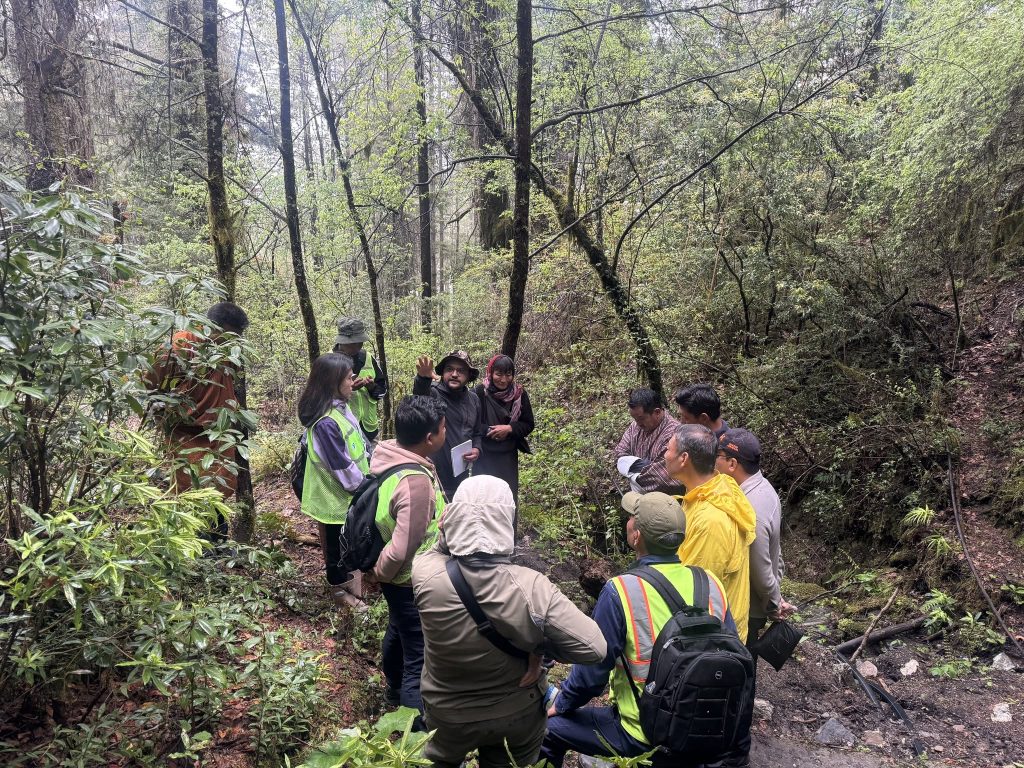
The mission continued in Tili, Paro, where the team worked closely with local leaders, community members, and representatives from the Jigme Singye Wangchuck School of Law.
As community members guided the team through the landscape, they pointed out several springs that had once supplied water reliably but had since dried up. These stories served as powerful reminders of the urgency of protecting and restoring spring systems before their decline becomes irreversible.
The team assessed the Woolitencha Chu spring and several spring sources in the Jari area, measuring discharge, documenting physical parameters, and examining surrounding geological formations. Detailed observations of rock outcrops and recharge areas provided further insights into how water moves beneath the surface and what interventions may be required to improve long-term water security.
In Nabisa and neighboring locations, additional geological assessments helped strengthen the understanding of groundwater recharge potential, while repeat visits to earlier sites ensured that observations and findings were thoroughly validated.
Connecting Science and Community Action
Throughout the mission, one theme remained constant: sustainable spring revival requires both scientific understanding and community stewardship.
Field observations, hydrological measurements, geological assessments, and local knowledge together created a more complete picture of the challenges facing spring systems in Yebisa, Punakha and Tili, Paro. By identifying recharge areas, understanding groundwater pathways, and documenting changing water conditions, the project is laying the foundation for targeted interventions that can improve water availability and strengthen climate resilience.
The mission concluded in Thimphu on 4 May, where findings and recommendations were presented to senior management. The knowledge gathered during the two-week assessment will help guide future project activities, ensuring that interventions are grounded in evidence while remaining responsive to community needs.
Looking Ahead
For generations, springs have quietly sustained Bhutan’s rural communities. Protecting these natural water sources is not only about safeguarding water supplies; it is about securing livelihoods, supporting agriculture, preserving ecosystems, and strengthening resilience in the face of a changing climate.
Through the HI-CAS Project, Tarayana Foundation continues to work alongside communities, technical experts, and partners to better understand these fragile systems and develop solutions that are both scientifically sound and locally owned.
Every spring tells a story. By listening carefully to the landscape, to the science, and to the communities that depend on them, we move one step closer to ensuring that these vital sources continue to flow for generations to come.