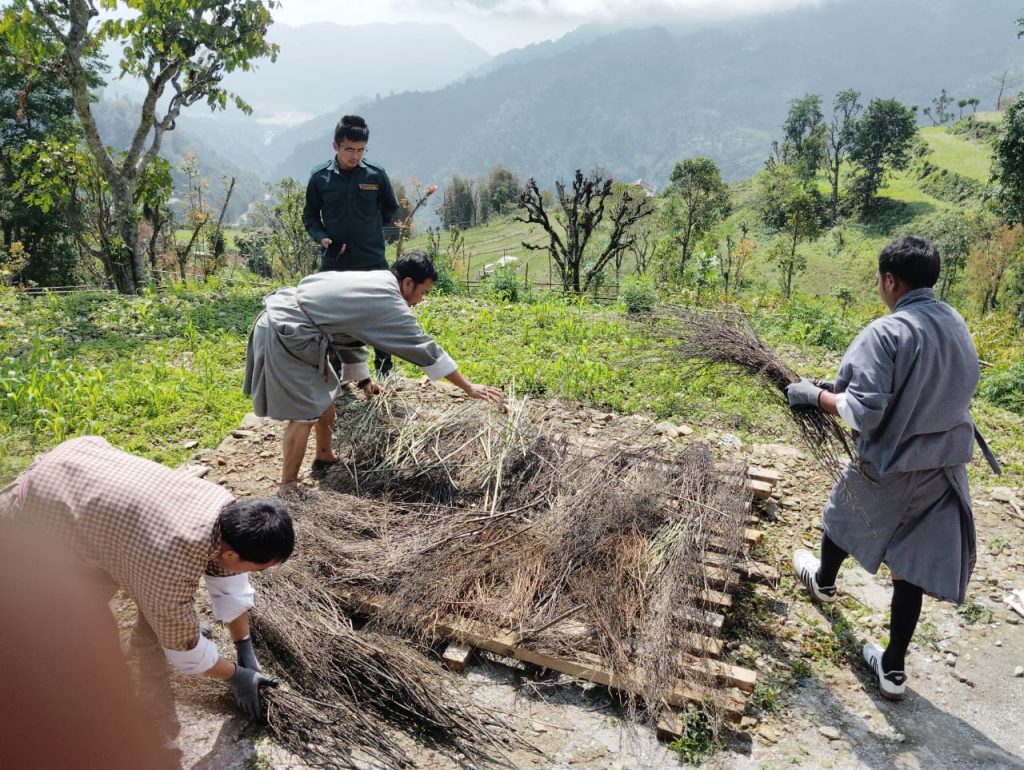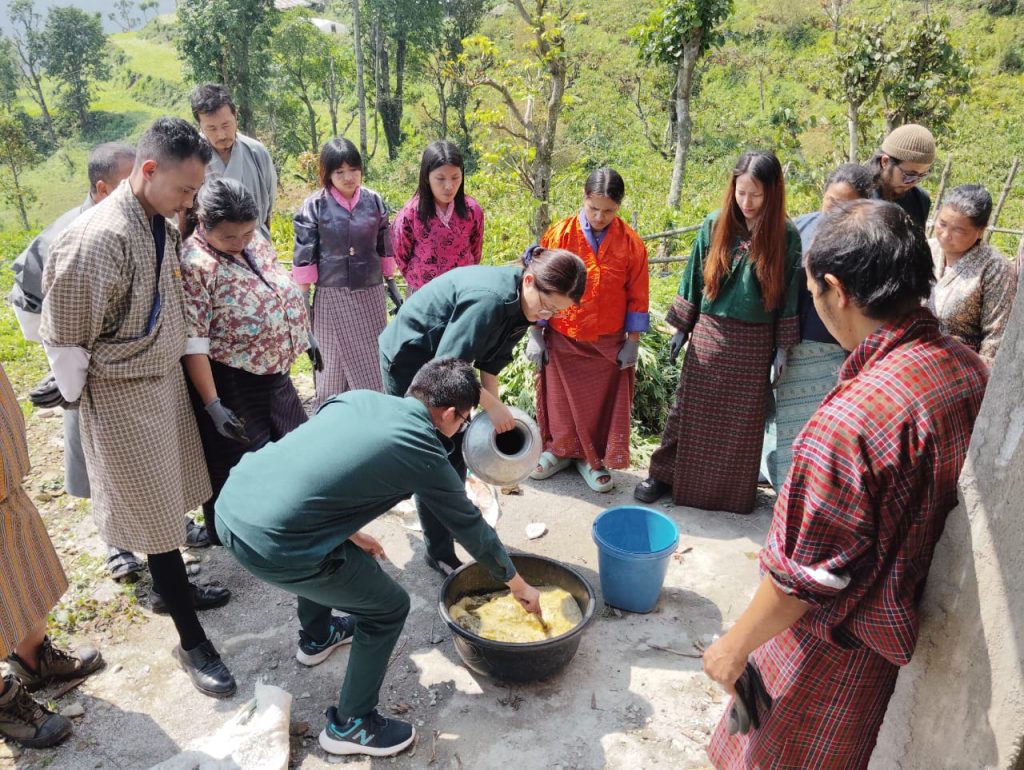
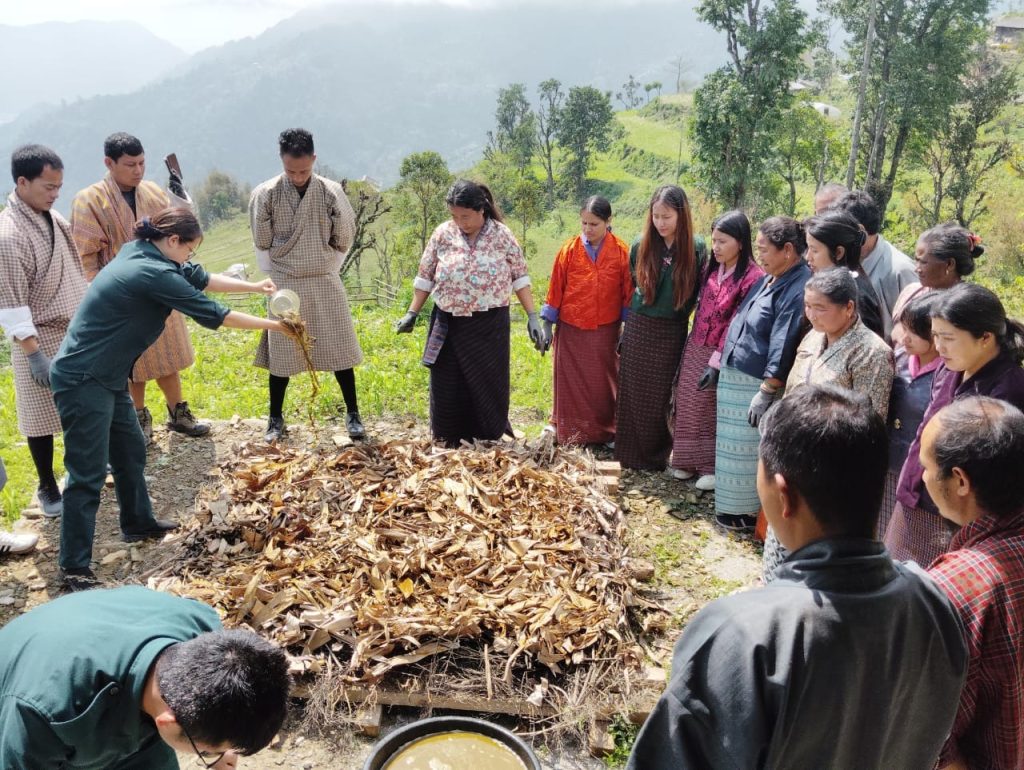
As part of the Living Landscape Project, the Tarayana Foundation successfully conducted a three-day training on Composting Technologies and the Application of Effective Microorganism (EM) Solutions for the community of Khempagang village under Tading Gewog, Samtse.
The training aimed to strengthen farmers’ knowledge and skills in sustainable agricultural practices that promote soil health, improve crop productivity, and support environmentally friendly farming methods. A total of 24 participants attended the program, including 13 women and 11 men, reflecting strong community participation and interest in sustainable farming techniques.
The sessions were facilitated by expert trainers from the National Soil Services Center (NSSC), who provided both theoretical and practical learning opportunities. Participants were introduced to key concepts related to:
- Understanding soil health and soil fertility
- Preparation and management of vermicompost
- Heap composting techniques
- Application and benefits of Effective Microorganism (EM) solutions in agriculture
The training emphasized hands-on learning, allowing participants to actively engage in vermicomposting demonstrations and practical exercises on compost preparation and EM application.
In addition to farmers, the training also saw participation from two Non-Formal Education (NFE) instructors, two ECCD facilitators, and a cook from Tashithang Central School, helping broaden awareness of sustainable agricultural practices within the wider community.
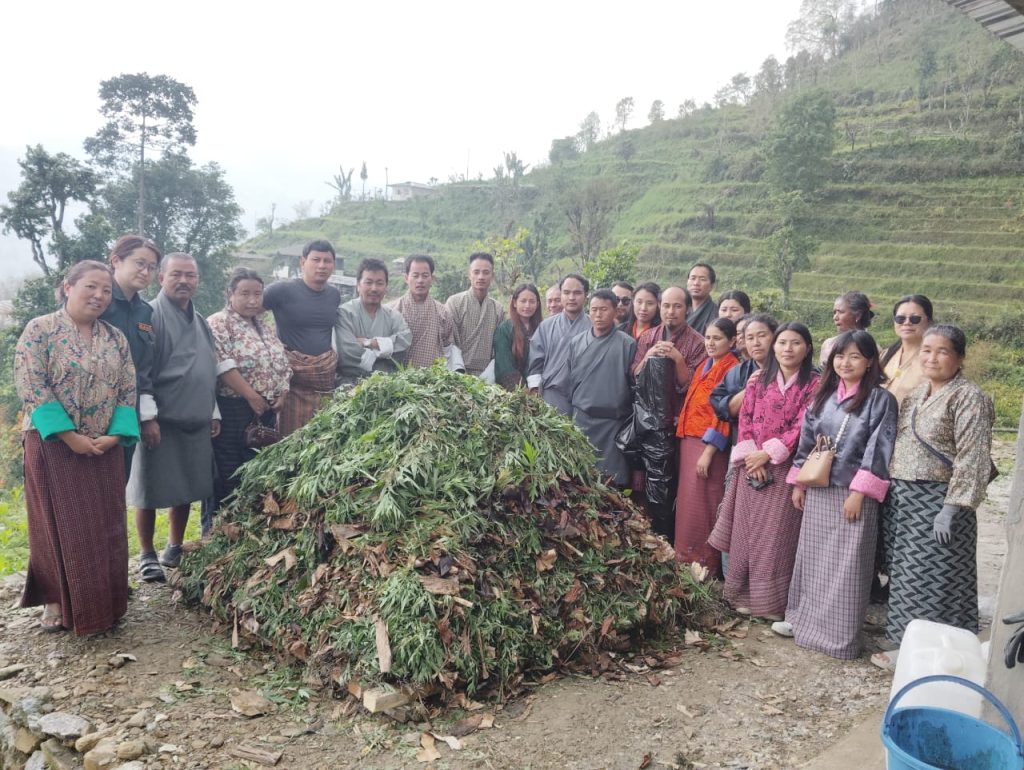
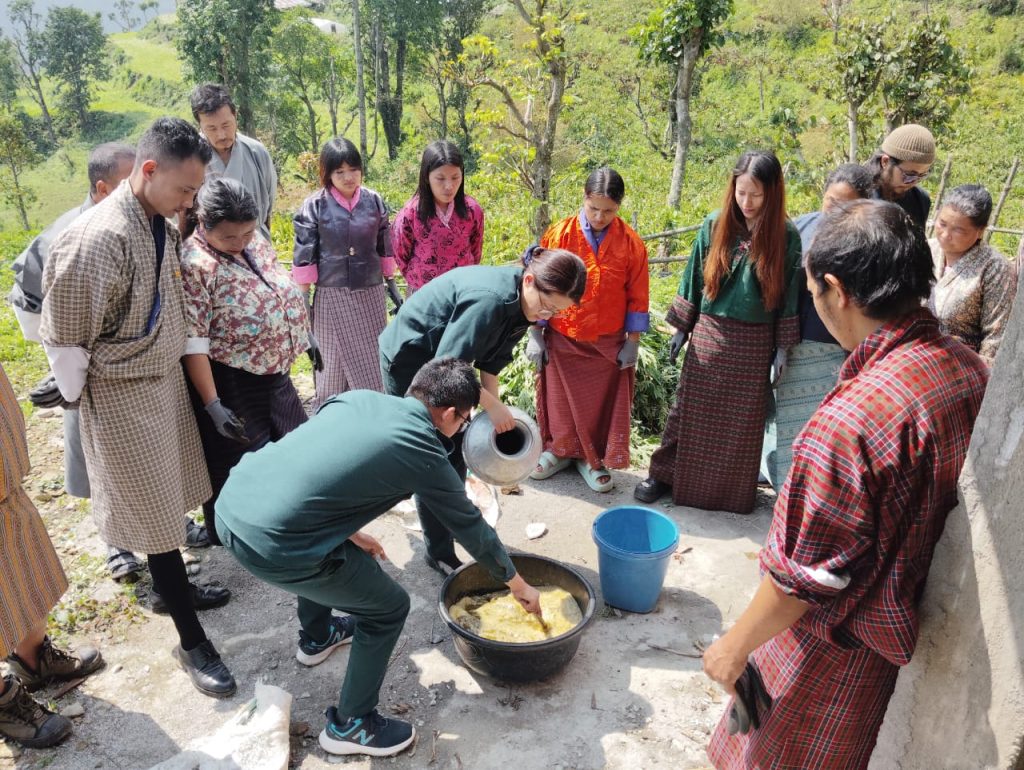
Throughout the three-day program, participants exchanged experiences, discussed local agricultural challenges, and explored practical solutions that can be applied within their own farms and households. The initiative not only enhanced technical knowledge but also encouraged community collaboration and environmental stewardship.
By promoting low-cost and sustainable composting technologies, the training contributes to improving soil productivity while reducing dependence on chemical fertilizers. Such initiatives play an important role in strengthening rural livelihoods and building resilient farming communities in Bhutan.