
A traditional craft finds new purpose in Haa and Samtse
What can a piece of Daphne bark become?
For the youth of Youka under Galkiling Gewog in Haa, and the communities of Jigme villages in Dophuchen Gewog, Samtse, it can become much more than paper. It can be a booklet, a paper bag, an envelope or a decorative sheet. With the right support, it can also become a new source of income.
From 18 to 31 August 2026, community members from the two villages, especially young people, came together for a 14-day training on traditional Daphne paper-making. They learned the craft and explored how to turn it into useful products that people will want to buy.
A group with a second chance
In Youka, Daphne paper-making is not new. The Youka Desho group formed in 2016 with all 18 households in the village as members, and it received a workshop, basic training, and some tools and equipment.
The group did not last beyond two years. Without a market for their products, a road connection to transport them, or advanced training and machinery, the community could not sustain it. Today, four youths from Youka are leading its revival. Under the Living Landscapes project, the group now has a bigger workshop, advanced training and better machinery.
Learning the craft, step by step
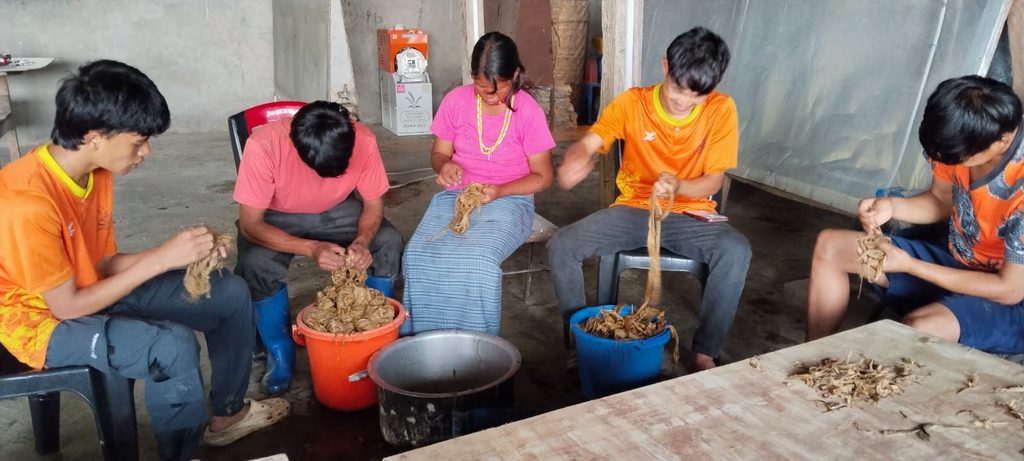
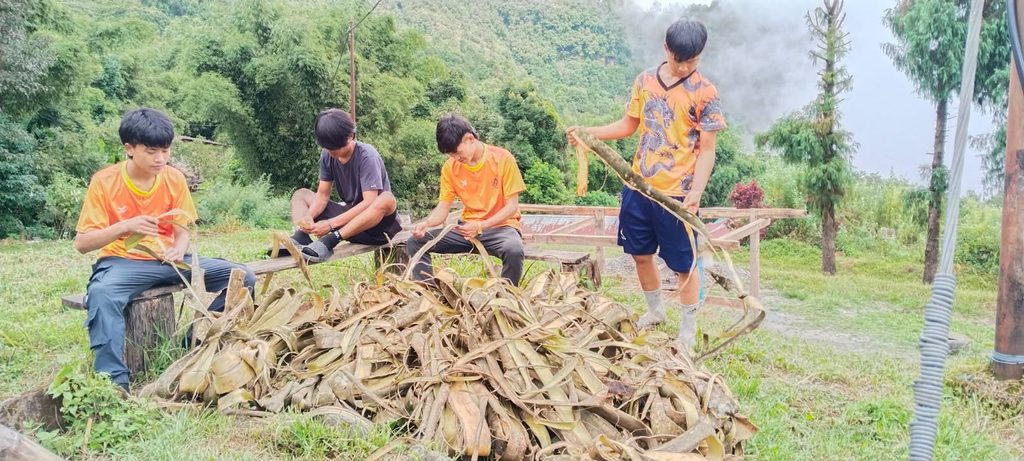
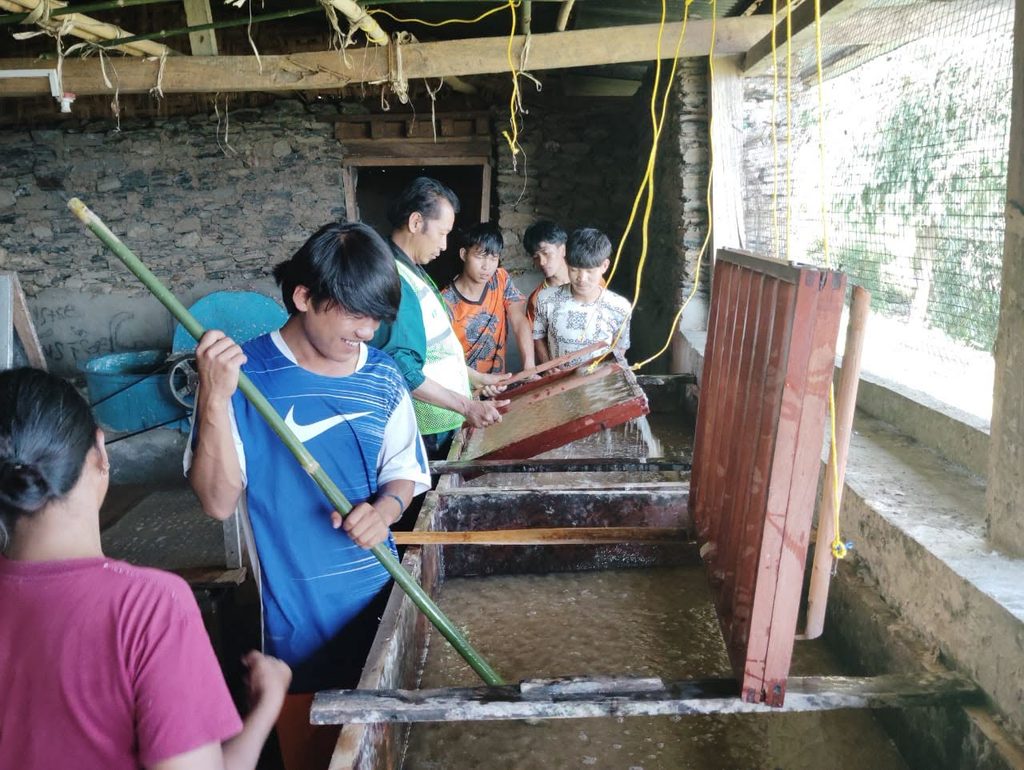
For many participants, this was their first time making Daphne paper. They began with the basics: removing and soaking the bark, cooking and preparing the fibre, separating and pulping it, and finally forming a smooth, even sheet.
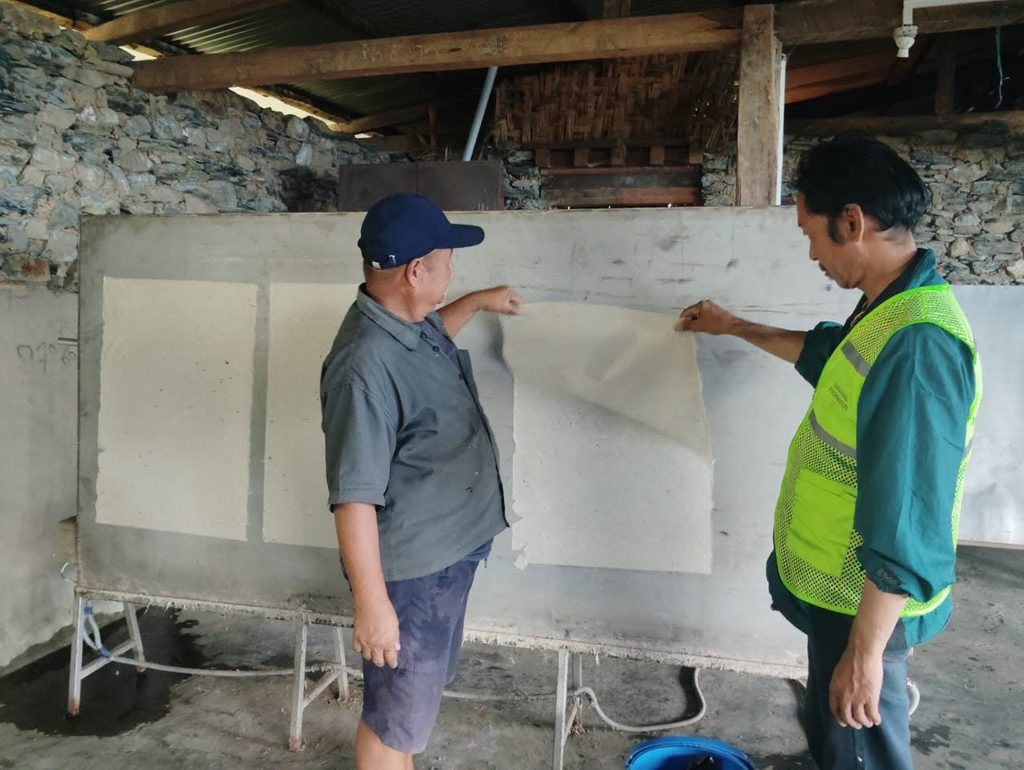
It was not easy. Getting the thickness and consistency right took patience and plenty of practice, and there were mistakes along the way. With hands-on guidance from the trainer, the participants kept at it. Slowly, the sheets became more even, their techniques improved, and their confidence grew.
Adding their own touch
As their skills improved, the participants began to experiment. They pressed flowers, grass leaves and colourful threads into the paper, turning plain sheets into something more personal and creative.
They then learned to make bags, booklets and envelopes from their handmade paper. By the end of the training, they had produced 450 pieces of plain and decorative paper and 150 envelopes, along with other products.
More than paper
For the participants, the training was about more than learning a technique. It showed them what a skill rooted in local knowledge and natural resources can offer. With creativity, practice and the right opportunities, a traditional craft can take on new life, creating environmentally friendly products and future livelihoods for the community.
Sometimes, new possibilities begin with something as simple as a piece of bark.
A simple fibre. A traditional skill. A new possibility.
This initiative was carried out under the Living Landscapes project, funded by the German Federal Ministry for Environment, Climate Action, Nature Conservation, and Nuclear Safety through the International Climate Initiative (IKI), with support from WWF Deutschland. In Bhutan, the project is implemented by Tarayana Foundation and WWF Bhutan, in close coordination with the Department of Forests and Park Services and the National Land Commission Secretariat.