

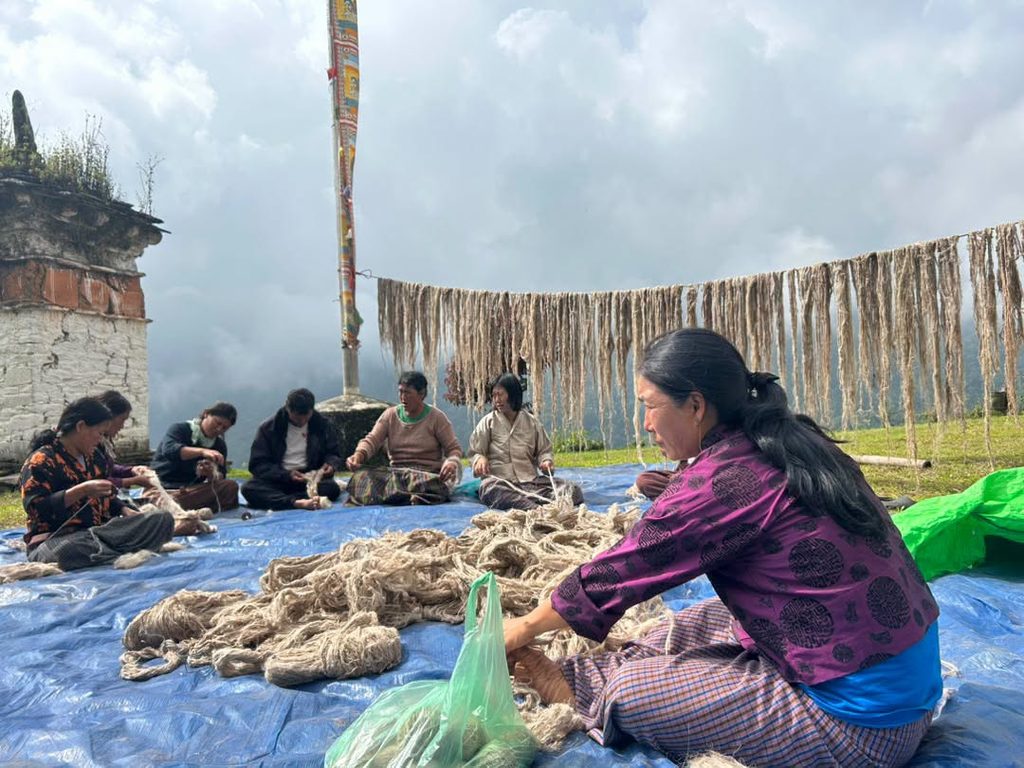

A week of learning and hands-on practice brought new opportunities to Balung Village in Larjab Gewog, Dagana, where a Nettle Yarn Processing Training was conducted for one week beginning on 28 September.
The training brought together 21 community members, including 14 women and seven men, to develop practical skills in processing nettle fibre and transforming it into yarn. Through hands-on learning, participants explored how a locally available natural resource can be processed into value-added products, creating opportunities for income generation and sustainable livelihoods.

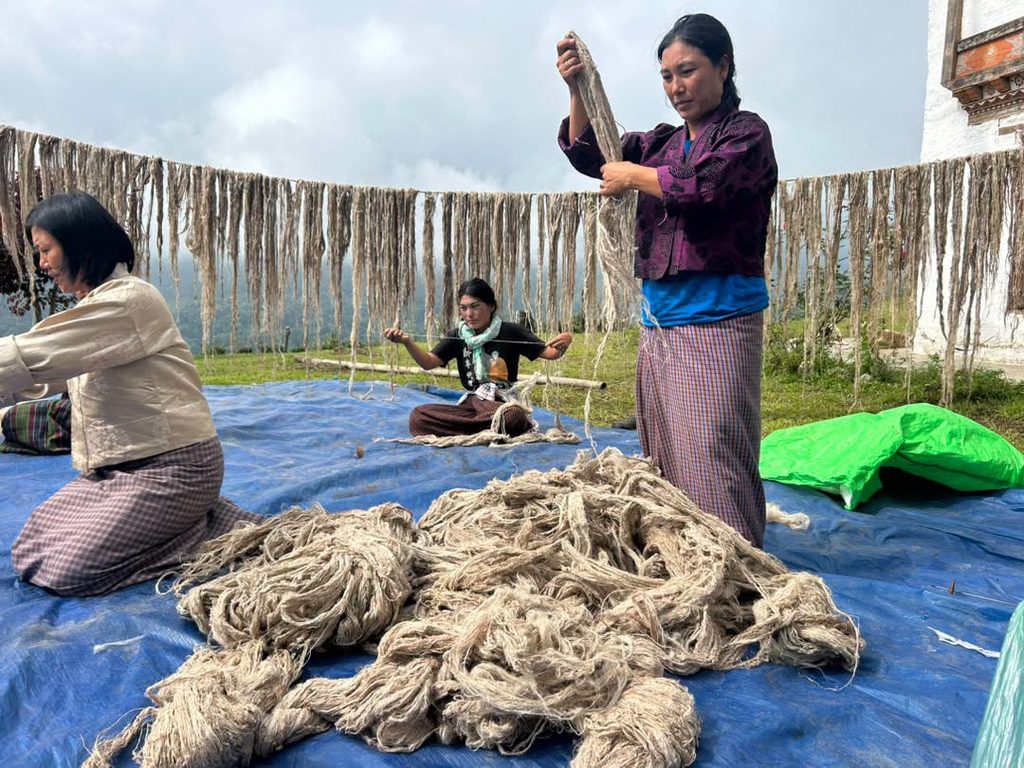
Beyond skills development, the initiative supports the establishment of the Balung Nettle Yarn Enterprise, which aims to promote local enterprise development, strengthen rural livelihoods, and expand economic opportunities for women and other community members.
By combining local resources with practical skills and enterprise development, the initiative demonstrates how traditional knowledge and locally available materials can contribute to employment, income generation, and more resilient communities.
Supporting Sustainable Livelihoods Through the Living Landscapes Project


The training was conducted under the Living Landscapes Project, funded by the German Federal Ministry for the Environment, Climate Action, Nature Conservation and Nuclear Safety through the International Climate Initiative (IKI), with support from WWF Deutschland.
In Bhutan, the project is implemented by Tarayana Foundation and WWF Bhutan, in close coordination with the Department of Forests and Park Services and the National Land Commission Secretariat.
Through initiatives such as the nettle yarn processing training, the project continues to support community-based enterprise development, promote the sustainable use of local resources, and create livelihood opportunities that contribute to resilient rural communities.